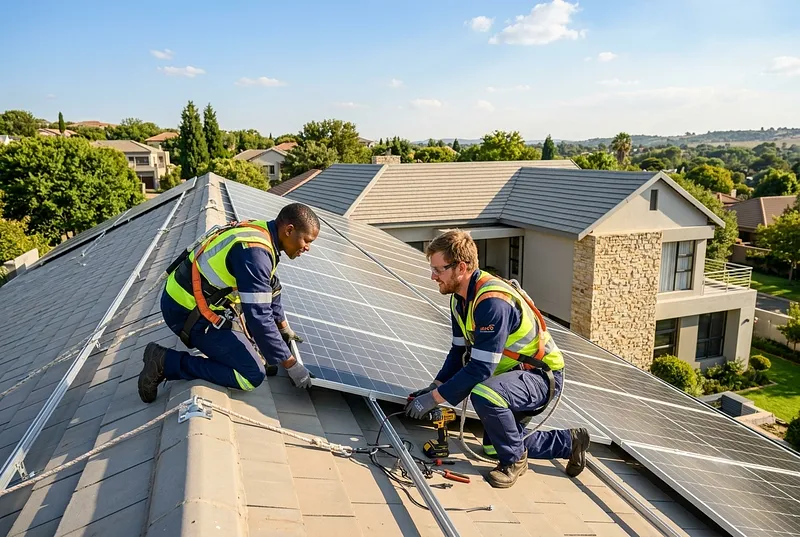
How much does a solar system cost in South Africa?
Solar and backup power system costs in South Africa have come down significantly since 2020, but the range is still wide depending on system size, inverter brand, and installation complexity. Here is what to expect in 2025–2026.
Typical solar and backup power costs (2025–2026)
| System type | Typical price range |
|---|---|
| Inverter only (no solar, no battery) — 3–5 kVA | R8,600 – R21,500 installed |
| Inverter + 1 × 5 kWh lithium battery | R19,400 – R38,000 installed |
| Hybrid 5 kVA inverter + 2 × 5 kWh batteries | R32,500 – R59,500 installed |
| 3 kWp solar panels only (no battery, grid-tied) | R38,000 – R59,500 installed |
| 5 kWp solar + 5 kWh battery (full hybrid system) | R70,000 – R120,000 installed |
| 8 kWp solar + 10 kWh battery (large household) | R120,000 – R190,000 installed |
| Solar geyser (evacuated tube, 150 L) | R8,600 – R17,300 installed |
| Heat pump water heater | R13,000 – R24,000 installed |
What affects the price?
- Inverter brand. Deye, Sunsynk, and Victron are common in South Africa. Victron is generally the most expensive but has excellent support. Deye and Sunsynk offer good value.
- Battery chemistry. Lithium iron phosphate (LiFePO4) batteries are the recommended choice — they last 10–15 years. Lead-acid batteries are cheaper upfront but need replacing every 3–5 years.
- Roof type and shading. IBR metal roofs make panel installation easier and cheaper. Tiles add complexity. Shading from trees or neighbouring buildings reduces output and may require additional panels.
- Eskom tariff area. Properties in areas with higher electricity tariffs see a faster return on investment.
- Municipal feed-in rules. Some municipalities allow excess solar to be fed back to the grid (Small-Scale Embedded Generation / SSEG); others do not.
Return on investment
At current Eskom rates (approximately R3.50–R4.50/kWh for residential), a 5 kWp system generating 700–800 kWh/month can offset R2,600–R3,900 on your electricity bill monthly. At that rate, a R86,500 system pays itself back in roughly 2–3 years — plus you gain independence from loadshedding.
Things to check before buying
- Compliance certificate. Solar installations require a Certificate of Compliance and, in most municipalities, SSEG registration. Make sure your installer handles this.
- Warranties. Panels typically carry a 25-year performance warranty. Inverters and batteries typically have 5–10 year warranties — check what is included.
- Get multiple quotes. Solar pricing varies enormously between installers. TruePro sends your request to every matching verified solar installer in your area, and each quote shows their trust score, so you can compare on more than price.
- Check load requirements. Ensure the system is sized to run your essential appliances (fridge, lights, Wi-Fi, TV) during loadshedding — and your non-essentials (oven, tumble dryer, pool pump) if you want full independence.
- Payment protection. Avoid paying a large deposit or the full amount upfront. TruePro's payment protection holds your payment securely until you've confirmed the system is installed and working correctly.